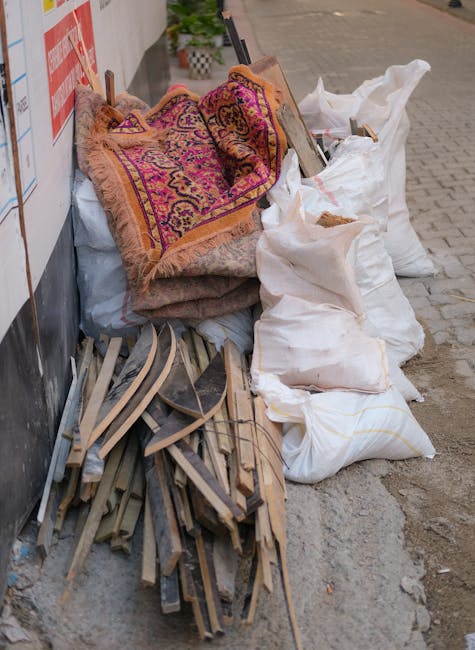
Permits and fines: carpet disposal law in Marylebone
If you are dealing with an old carpet in Marylebone, the legal side can feel oddly more stressful than the lifting and hauling. One minute you are thinking about stains, roll marks, and whether the underlay is salvageable; the next, you are wondering if the waste sack on the pavement could trigger a fine. Permits and fines: carpet disposal law in Marylebone matters because carpet removal is not just a household chore. It sits inside local waste rules, fly-tipping enforcement, and responsible disposal duties that can catch people out, especially in flats, managed buildings, and busy streets where the pavement is not exactly forgiving.
This guide breaks the topic down in plain English. You will learn when a permit may be needed, what usually causes fines, how to avoid enforcement trouble, and how to dispose of carpets in a way that is tidy, lawful, and far less annoying than it sounds. To be fair, most problems come from rushed decisions, not bad intentions.
Table of Contents
- Why Permits and fines: carpet disposal law in Marylebone Matters
- How Permits and fines: carpet disposal law in Marylebone Works
- Key Benefits and Practical Advantages
- Who This Is For and When It Makes Sense
- Step-by-Step Guidance
- Expert Tips for Better Results
- Common Mistakes to Avoid
- Tools, Resources and Recommendations
- Law, Compliance, Standards, or Best Practice
- Options, Methods, or Comparison Table
- Case Study or Real-World Example
- Practical Checklist
- Conclusion
- Frequently Asked Questions
Why Permits and fines: carpet disposal law in Marylebone Matters
Carpet disposal seems simple until you are standing in a narrow Marylebone street with a rolled-up old carpet that will not fit in the lift, and no one is quite sure who is responsible for removing it. That is where permit and fine issues start to matter. In central London, the wrong disposal method can lead to complaints, blocked access, unlicensed waste collection, or accusations of fly-tipping if the carpet is left in the wrong place at the wrong time.
Marylebone properties often bring extra complications: mansion blocks, shared entrances, basement flats, porter-led buildings, loading restrictions, and tight kerb space. The practical effect is straightforward. If you place waste out without permission, use the wrong vehicle access, or hand waste to an unlicensed carrier, you may expose yourself to penalties and inconvenience. Nobody wants a carpet disposal job turning into a council complaint or a building management headache.
There is also the reputational side. If you are a landlord, letting agent, facilities manager, or commercial occupier, poor waste handling can create a much bigger issue than the carpet itself. That is why many people pair responsible disposal with proper care for the room afterwards, using services such as professional carpet cleaning or, where appropriate, steam carpet cleaning before deciding whether a carpet truly needs to go.
Practical takeaway: the safest approach is to treat carpet disposal as a waste-compliance task, not just a clearance task. If you are unsure, pause before placing anything outside. One wrong move can be more expensive than the disposal itself.
How Permits and fines: carpet disposal law in Marylebone Works
The rules are best understood in layers. First, a carpet is waste once it is discarded. Second, waste must be stored, moved, and handed over responsibly. Third, if you need to place waste in a public area or use a vehicle or skip in a controlled way, permissions may be needed depending on the circumstances. The exact permission route varies, but the principle is consistent: public space is not a free dumping ground, even for a short while.
In practical terms, Marylebone residents usually face one of four situations:
- The carpet can be bagged or bundled and taken to a permitted disposal route.
- A collection service removes it from private property without it touching the public highway.
- A skip, container, or loading arrangement is used under the relevant permission or building approval.
- The waste is left outside in a way that risks enforcement action.
The last one is where fines enter the picture. Fines are commonly linked to illegal dumping, obstruction, or poor waste presentation. You may not always be fined immediately, and that uncertainty is part of the problem. But the risk rises when waste is visible on the street, left too early, not properly secured, or handed to someone who cannot prove lawful waste handling.
There is a quieter issue too: duty of care. In simple terms, you should make reasonable checks that the person taking the carpet is authorised to do so and that the waste will be handled properly. A cheap shortcut can become a costly mistake if the waste ends up fly-tipped elsewhere. Bit grim, but that is the reality.
For households dealing with mixed soft furnishings, the disposal decision is often influenced by condition. A carpet with deep staining, persistent pet odour, or backed-in dust may be better assessed first rather than removed automatically. Services such as pet stain and odour removal and stain removal can sometimes extend usable life and reduce unnecessary waste.
Key Benefits and Practical Advantages
Staying on the right side of carpet disposal law is not only about avoiding a fine. It creates a calmer, cleaner process from start to finish.
- Reduced enforcement risk: you are less likely to attract penalties or complaints from neighbours and building managers.
- Cleaner common areas: no awkward rolls of carpet in hallways, front steps, or shared entrances.
- Better planning: you can schedule removal around access times, lift availability, and parking restrictions.
- Lower waste costs: lawful disposal is often cheaper than dealing with the fallout from a bad decision.
- Improved sustainability: if a carpet can be cleaned, reused, or repaired, you avoid sending perfectly useful material to waste.
There is also a subtle benefit that people often miss: lawful disposal tends to improve the whole move-out or refurbishment process. Once the waste side is sorted, everything else feels easier. The room is clearer, decisions are simpler, and you stop second-guessing whether you have done something silly. That peace of mind is worth a lot.
For landlords and commercial teams, the benefits scale up quickly. An orderly waste process helps protect schedules, building relationships, and tenant handovers. If you are managing repeated turnover, it can make sense to combine disposal planning with broader maintenance, including commercial carpet cleaning and other upkeep such as upholstery cleaning where furniture is being refreshed rather than replaced.
Who This Is For and When It Makes Sense
This topic matters to more people than you might think. Carpet disposal law touches everyday households, but it also affects anyone coordinating access, waste, or refurbishment in Marylebone.
- Homeowners: replacing worn carpets, moving home, or clearing a spare room.
- Renters: removing an old carpet after agreement with a landlord or letting agent.
- Landlords and managing agents: handling end-of-tenancy clearance and common-area access.
- Businesses: offices, studios, hospitality spaces, and retail units refreshing flooring.
- Contractors and decorators: needing a tidy waste plan before new floors are laid.
It makes sense to pay attention whenever the carpet will leave the property entirely, or when the disposal route passes through a communal area, pavement, forecourt, or loading bay. If the carpet is simply being cleaned, that is a different conversation. In those cases, a service such as rug cleaning or sofa cleaning may preserve the item and sidestep disposal altogether. No need to bin something just because it looks tired on a Monday morning.
Step-by-Step Guidance
Here is a sensible approach that keeps things legal and manageable.
- Check the condition of the carpet. Decide whether it is truly beyond repair or whether cleaning would solve the problem. If the issue is odour, marks, or wear, a cleaning or restoration route may be better.
- Confirm ownership and permissions. If you rent or manage a building, check who is responsible for removal and whether building rules apply to waste placement or collection access.
- Measure and plan the route out. In Marylebone, tight stairwells and lifts can make a simple removal awkward. Measure door widths and protect walls if needed.
- Choose a lawful disposal method. Use a private collection, lawful waste transfer route, or approved facility. Avoid leaving items outside unless you have clear permission and timing.
- Keep the carpet secured. Roll it, tape it if appropriate, and make sure loose fibres are not trailing across shared areas.
- Ask for evidence where needed. If someone is taking the carpet away, get clarity on their waste-handling arrangements. A responsible operator should not mind that question.
- Document the process. For landlords or businesses, keep a simple record of who removed the waste and when. It is boring, yes, but useful if a question comes up later.
A small real-world detail: if you are arranging a collection, do not assume the easiest loading time is the best time. In central London, the quiet hour you wanted can suddenly be the busy hour with deliveries, pedestrians, and a parked van that refuses to budge. It happens.
Expert Tips for Better Results
After dealing with a fair number of flooring jobs and post-clean decisions, the pattern is usually the same: people get into trouble because they underestimate access, timing, or paperwork. The carpet itself is rarely the main problem.
1. Decide early whether cleaning is smarter than disposal
If the carpet is structurally sound, lifting it out may be unnecessary. A deep clean can often recover a room without triggering disposal logistics. That is especially useful in period properties, furnished rentals, and offices where replacement would be disruptive.
2. Keep the waste route private where possible
The fewer moments the carpet spends in a public area, the lower the risk. Moving waste directly from room to vehicle is cleaner, simpler, and usually less stressful.
3. Be careful with communal buildings
Flat blocks can have their own rules about lifts, service entrances, storage, and contractor access. Building management may be stricter than you expect, and fair enough too, because one careless job affects everyone else.
4. Treat "cheap collection" offers cautiously
If a price feels suspiciously low, ask questions. Who is collecting it? Where is it going? Is the service lawful and traceable? Those questions are not awkward; they are sensible.
5. Match the method to the material
Thick wool carpet, glued carpet tiles, and mixed synthetic flooring can all behave differently when removed. The disposal method should suit the job, not the other way around.
For rooms with multiple soft furnishings, it can also be efficient to combine decisions. For example, if you are refreshing a room rather than emptying it, a mixed plan using curtain cleaning and mattress cleaning may keep more items in service and reduce the waste pile. That is often a better outcome, and less wasteful, plain and simple.
Common Mistakes to Avoid
Most fines and disposal disputes come from predictable errors. The good news? They are easy to avoid once you know what to look for.
- Leaving carpet on the pavement too early: even if collection is later, early placement can still be treated as improper waste presentation.
- Assuming a skip or van can be parked anywhere: parking and loading restrictions still apply in busy areas.
- Using an unlicensed collector: if the waste disappears into a van with no trace, you have a problem waiting to happen.
- Mixing carpet with unsuitable rubbish: wet waste, sharp debris, and general junk can complicate handling.
- Ignoring building rules: a polite email to management can save you a long awkward conversation later.
- Throwing away something that could be cleaned: sometimes the carpet does not need disposal, only proper care.
One slightly funny truth: the most common phrase before a waste issue is "it'll only be there for ten minutes." Ten minutes has a way of becoming a complaint. Every time.
Tools, Resources and Recommendations
You do not need specialist gear for every disposal job, but a few practical items make the process much easier.
- Heavy-duty tape: useful for securing rolled carpet edges so fibres do not unravel.
- Gloves and dust protection: handy if the carpet is old, dusty, or carries allergens.
- Measuring tape: essential for stairs, lifts, and doorways.
- Plastic sheeting or floor protection: helps protect hallways and communal spaces.
- Checklist or handover note: useful for landlords, agents, and commercial clients.
From a service-planning perspective, the most useful resources are often the ones that reduce uncertainty before the job starts. If you need pricing clarity, it is sensible to review pricing and quotes in advance. For confidence around service handling and broader operational standards, pages such as health and safety policy and insurance and safety can also be helpful reading.
If sustainability matters to you, take a look at recycling and sustainability. It is not only about sounding responsible; it helps you think more carefully about whether an item should be repaired, cleaned, reused, or discarded. That is usually the better order, honestly.
Law, Compliance, Standards, or Best Practice
While this article is not legal advice, the safe operating principle is clear: do not place waste into public space without proper permission, do not hand waste to someone who cannot handle it lawfully, and do not assume that being a resident gives automatic disposal rights. In London, waste control is treated seriously, and carpet disposal is no exception.
Best practice usually includes:
- keeping waste on private property until collection time where possible;
- using a trustworthy and traceable disposal route;
- checking building and access rules before moving bulky items;
- not obstructing pavements, entrances, or emergency access;
- storing anything waiting for collection safely and neatly;
- preferring reuse or cleaning when that is viable.
For commercial settings, compliance expectations are even more important because repeated disposal activity can create audit, safety, and tenant-management issues. If you are regularly refreshing office floors or shared spaces, combine waste planning with maintenance routines and make sure your contractor approach is documented in the same calm, boring, useful way each time. Boring is good here.
Options, Methods, or Comparison Table
The right method depends on the carpet's condition, your access, and how quickly you need the space cleared.
| Method | Best for | Pros | Watch-outs |
|---|---|---|---|
| Professional cleaning | Carpets that are dirty but still usable | Cheaper than replacement, less waste, faster than a full strip-out | Not suitable if backing is damaged or carpet is beyond saving |
| Private lawful collection | Household or business waste that needs removal from the property | Convenient and usually tidy | Must be traceable and properly arranged |
| Skip or bulk waste arrangement | Larger clearances and refurbishments | Handles multiple items at once | May require permissions, space, or building approval |
| DIY carry-out to disposal point | Small items and confident movers | Direct control over the process | Physical effort, access issues, and transport limitations |
In Marylebone, many people find that a hybrid approach works best: assess first, clean what can be saved, and only dispose of what truly needs removing. It sounds simple, but that order of operations saves time, money, and a lot of unneeded stress.
Case Study or Real-World Example
Consider a typical Marylebone flat: one bedroom carpet is heavily marked near the bed, the hallway carpet is worn but intact, and the resident wants everything cleared before new furniture arrives on Friday. The first instinct is often to rip everything out and start again. But after a quick assessment, only the bedroom carpet is clearly beyond saving. The hallway carpet still has life left in it.
In that situation, the safer route is to remove only the damaged piece, keep it on private property until collection, and avoid putting it outside the night before. The hallway carpet is cleaned instead of disposed of. If the bedroom carpet is actually salvageable after stain treatment, a cleaning step may prevent disposal altogether. The result is less waste, less handling, and no awkward bundle left by the bins overnight.
Now imagine the less careful version. The carpet is left out the evening before, the weather turns damp, someone trips over it while carrying shopping, and building management gets involved. Suddenly the task has become bigger than a flooring job. That is exactly why the permit-and-fine question matters even for ordinary home projects.
Practical Checklist
Use this quick checklist before you move a carpet for disposal in Marylebone.
- Have you confirmed the carpet really needs to be discarded?
- Have you checked whether cleaning or repair would be enough?
- Do you know who is responsible for disposal if you rent or manage a property?
- Have you checked building rules, loading arrangements, and access times?
- Is the carpet rolled, secured, and easy to carry safely?
- Will it stay on private property until collection?
- Have you chosen a lawful and traceable disposal route?
- If someone is collecting it, can they clearly explain how the waste will be handled?
- Have you protected floors, walls, and communal areas?
- Have you kept any needed records or notes?
If you can tick those off, you are in a much better position. Not perfect maybe, but far better. And that is usually enough.
Get a free quote today and see how much you can save.
Conclusion
Permits and fines: carpet disposal law in Marylebone is really about one thing: handling bulky waste responsibly in a dense, high-footfall part of London where access, parking, and shared spaces matter. If you plan ahead, keep the carpet off the public highway unless permission is clear, and use a lawful disposal route, the process becomes straightforward. If you rush it, the risk of complaints and fines climbs quickly.
The best outcomes usually come from making a calm decision early. Clean what can be saved. Dispose of what cannot. Keep the process private, tidy, and traceable. That approach protects you, your neighbours, and the people who have to live or work around the job.
And honestly, that extra bit of care tends to make the whole room feel better too. Clean edges, clear floors, no drama. A small win, but a proper one.
Frequently Asked Questions
Do I need a permit to dispose of a carpet in Marylebone?
Not always. It depends on how the carpet is being removed, whether it touches public space, and whether you are using a skip, vehicle access, or temporary placement that needs permission. If the waste stays on private property until lawful collection, a permit may not be needed.
Can I leave an old carpet on the pavement for collection?
Only if you have clear permission and the arrangement is lawful. In many cases, leaving bulky waste on the pavement without the right setup can lead to enforcement issues or complaints.
What kind of fines can happen for bad carpet disposal?
Fines can arise from illegal dumping, obstruction, or waste placed incorrectly. The exact response depends on the circumstances and the enforcing body, so it is better to prevent the issue than try to fix it later.
Is it fly-tipping if I put a carpet outside briefly?
It can be, depending on location, timing, and permission. "Only for a short while" is not a reliable defence if the waste was placed improperly in a public area.
Can my landlord make me remove the carpet?
Sometimes, yes. It depends on the tenancy agreement, the condition of the carpet, and whether the damage is your responsibility. If you rent, check before acting.
What if my carpet is dirty but not damaged?
That is usually a strong sign to consider cleaning rather than disposal. A proper clean may restore the room more efficiently and avoid waste altogether.
Are carpet tiles treated differently from fitted carpets?
They can be. Carpet tiles are often easier to lift and separate, but the disposal rules still depend on where they are stored, who removes them, and whether they are handled responsibly.
How do I know if a waste collector is legitimate?
Ask how they handle waste, where it goes, and whether they can explain the process clearly. A legitimate operator should be able to answer those questions without fuss.
What should businesses in Marylebone do differently?
Businesses should document the process more carefully, check access and building rules, and use traceable disposal methods. Commercial sites usually face more scrutiny and less tolerance for disorder.
Can cleaning be better than disposal for older carpets?
Very often, yes. If the carpet is structurally sound, cleaning may be cheaper, faster, and more sustainable than replacement. It is worth assessing before you lift anything out.
What is the safest way to move a carpet through a shared building?
Roll it securely, protect corners and walls, use the agreed route, and move it at the agreed time. The goal is to keep the common areas clean and reduce disruption.
Where can I get help with carpet cleaning instead of disposal?
If the carpet may still be salvageable, start with a professional assessment and consider options like carpet cleaning or steam carpet cleaning. That can often be the simpler and smarter route.